Drink and drug driving in Korea
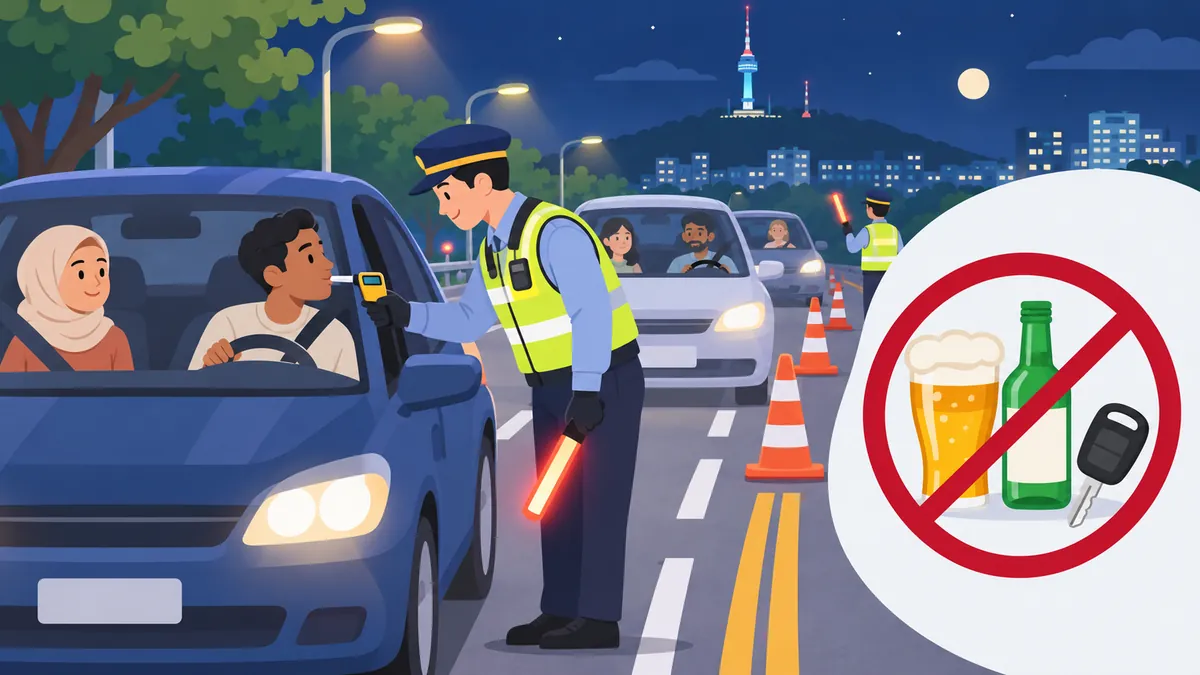
Korea has one of the strictest drink-driving limits in the world, and the rules keep getting tougher. Police run roadside breath tests at night and on weekends, and refusing a test is a crime.
The limit: 0.03%
- Driving with a blood alcohol level of 0.03% or more is drink driving. One or two drinks can be enough.
- The only safe rule: if you drink, do not drive. Use a designated driver service (대리운전), a taxi or public transport.
- Alcohol can stay in your body the next morning. Morning-after checks are common.
Penalties by blood alcohol level
- 0.03% to under 0.08%: license suspension, and up to 1 year in prison or a fine of up to 5 million won.
- 0.08% to under 0.2%: license revoked, 1 to 2 years in prison or a fine of 5 to 10 million won.
- 0.2% or more: license revoked, 2 to 5 years in prison or a fine of 10 to 20 million won.
- If someone is injured: 1 to 15 years in prison or a fine of 10 to 30 million won. If someone dies: life imprisonment or at least 3 years in prison.
New since October 2024: alcohol interlocks
- A driver whose license was revoked for drink driving twice or more within 5 years can only get a conditional license with an alcohol ignition interlock fitted to the car.
- The car will not start unless the breath test is under the limit, and a camera checks that the driver takes the test. The driver pays for it (about 3 million won).
- Driving a car without the device, or letting someone else blow into it, is treated as driving without a license.
New from April 2026: tougher drug-driving penalties
- Driving when drugs make it hard to drive normally is now punished by up to 5 years in prison or a fine of up to 20 million won (before: 3 years and 10 million won).
- Refusing a drug test is now punished the same as drug driving.
- This includes some prescription and over-the-counter medicines that cause drowsiness. Ask the pharmacist if your medicine affects driving.
If police stop you
- Stop, open the window and follow the officer's instructions for the breath test.
- You may ask for a blood test if you disagree with the breath result.
- If you need an interpreter, call the Korea Travel Hotline 1330 (24 hours).
These rules also appear in the written test. Try them in the practice test.
Sources: Road Traffic Act (Articles 44 and 148-2); amended Road Traffic Act on alcohol ignition interlocks (in force October 25, 2024); amended Road Traffic Act on drug driving (in force April 2, 2026), as reported by the National Police Agency and Korean media. Checked November 2026.